

Sitting in Munich, it is easy to feel like the world’s punchbag.
Between the sudden spikes in energy prices, the erosion of the industrial base, and the geopolitical tremors from the East and the Middle East, Europe—and Germany specifically—gets hit first. We are the front line of every global friction.
But there is a dangerous narrative taking hold in European boardrooms.
It is the idea that while we suffer, China sits back and collects the spoils. The theory is simple: China isn’t a combatant; therefore, China is the winner. It is a clean, academic theory.
It is also wrong.
I spent the last week on the phone with partners, factory owners, and strategic directors across China. I don’t read reports to understand the market; I check the "water temperature" by talking to the people running the boilers.
Here is what the frontier actually looks like.
The Shield is Not an Island
China has spent three decades preparing for this moment. They have built the most resilient, vertically integrated supply chain in human history. They have hoarded strategic reserves. They have secured energy routes.
On paper, the armor looks impenetrable.
But an armor is only useful if you have something to protect. China remains, at its core, a massive export engine. Its stability, its internal profit margins, and its social contract are all derivatives of global growth.
When the world economy shakes, China doesn't just watch. It vibrates.
If the American consumer stops spending and the German Mittelstand stops producing, the "resilience" of the Chinese supply chain becomes a liability. You cannot eat aluminum billets. You cannot pay workers with "strategic reserves."
The shield is not an island. When the global vacuum of demand starts to pull, even the strongest armor begins to crack.
The Aluminum "Whiplash": A Lesson in Real-Time Chaos
If you want to see the pulse of the market, look at aluminum.
Since the escalation of conflict in the Middle East, we saw a classic "academic" reaction: The price skyrocketed. The market panicked about the availability of supply and the energy-intensive nature of smelting.
Then, something happened that shocked the theorists.
While the war got hotter, the price of aluminum suddenly collapsed. Why?
The answer isn’t found in a newspaper. It’s found in the unit economics of the shop floor.
- The Fear Spike: The initial surge was driven by traders. It was a speculative hedge against a shortage that hadn't happened yet.
- The Demand Crash: The quick downturn occurred because the "playground"—the actual industrial players—realized that global demand is about to crater.

The market isn't pricing in a shortage of aluminum anymore. It is pricing in a shortage of customers.
This is the "whiplash" effect. For those of us on the ground, this isn't just a data point. It is a warning. It tells us that the global economy is anticipating a winter that no amount of state-led stimulus can fix.
Involution: The War Inside the Border
While analysts talk about "Global China," I am watching "Internal China."
Chinese manufacturers are currently locked in a state of neijuan—involution. It is a hyper-competitive race to the bottom where companies are cutting margins to zero just to keep the lights on.
Now, layer on the external shocks:
- Rising energy costs for raw material processing.
- Logistics chaos in the Red Sea and the Strait of Hormuz.
- The "punchbag" effect of a weakening European currency.
Chinese businesses are being hit by the same war that is hitting Munich. In some aspects, they remain in "better shape" than the West, but they are not immune. They are simply the last ones to feel the full weight of the blow.
There Are No Winners in a Burning Building
Regardless of what you read in the Sunday papers, there is no "neutral winner" of a global conflict.
Whether you are in Milwaukee, Munich, or Macau, the ripples of war eventually reach your shore. For the German Mittelstand owner, the challenge is succession and energy. For the Chinese manufacturer, the challenge is a world that can no longer afford to buy what they build.
I don’t play the ball based on the weather forecast. I play based on how the ball feels in my hands.
Right now, the ball is heavy.
The Operator’s Mandate
In this environment, "strategy" is a luxury. You need to look at the unit economics. You need to understand the physics of the supply chain, not just the politics of it.
At Echo Nova, we are currently navigating these transitions for companies caught in the crossfire between Europe and Asia. We aren't looking for "winners." We are looking for survivors who understand that the old maps no longer work.
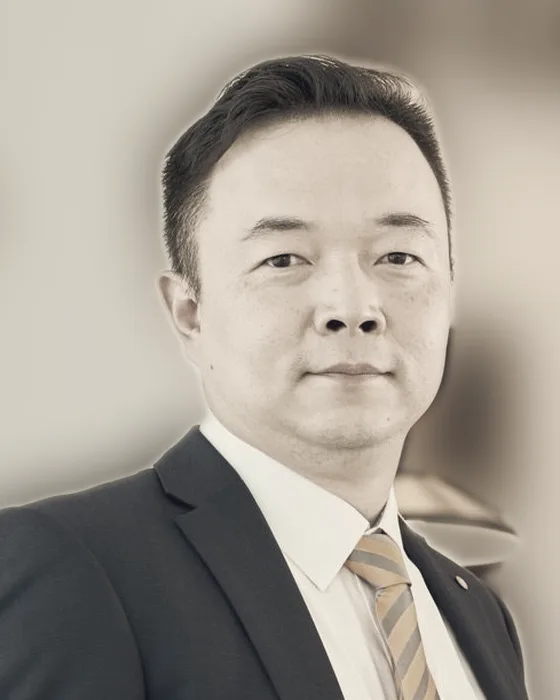
Tim Y. Chen
Managing Partner, Echo Nova Capital & Partners
Munich
First published on 24 March 2026 on LinkedIn, on the Echo Nova Capital & Partners page. Read the original
This article is also available in German: Die Illusion der Immunität: Warum China nicht der „Gewinner“ des globalen Chaos ist
