

For many owner-run manufacturers in Germany, Austria and Switzerland, a strategic buyer from Asia is a serious option. Such a buyer often values exactly what a domestic buyer will hardly pay for: your customers, your brand, your place in the European market. Finding interest is rarely the hard part. Getting to completion is.
Four questions decide the outcome. What does the buyer really want? Can he obtain every approval? Do both sides actually understand each other? And is what matters to you written into the contract before you sign?
Why more owners are looking at buyers from Asia
Many owners have spent decades building their company. When it is time to hand over, nobody in the family wants to take it on, and suitable buyers at home are scarce. If a competitor buys, your brand may disappear. If a financial investor buys, he usually plans to sell again within a few years.
A strategic buyer from Asia is a third option. He buys to run the business himself. And he brings what you are missing: sourcing and production in Asia, and access to Asian markets.
This does not only mean companies based in China or Taiwan. Many Asian companies already have their own plants and subsidiaries in Europe. They know the rules here and have local management. Those sales tend to run more smoothly.
1. What does the buyer really want to buy?
In the negotiations I have led and advised on, buildings and machines were rarely the reason for a purchase. Asian manufacturers can often build something similar at home for less. What they are after cannot be bought in Asia, and is hard to build from scratch:
- the trust of European customers and long-standing orders
- your brand and the reputation of “Made in Germany”
- sales channels, approvals and certifications
- engineers who know what European customers expect
That has two consequences for you.
The price. A strategic buyer pays for what he can do with your company, not only for what it earns today. If he can link your products to production in Asia, or take them into Asian markets, he has good reason to offer more. Provided someone sets out that potential clearly before the negotiation starts. At Echo Nova, that is the job of Daniel Chua, our partner for manufacturing and supply chains in Asia.
The plant and the workforce. Where do your plant and your people fit in the buyer’s plans? Ask early, and ask directly. There is no wrong answer. But you should know it before you sign.
A buyer from Asia rarely buys your machines. He buys the trust your customers place in you.
2. Can the buyer actually complete?
A buyer from China or Taiwan usually needs three approvals before the purchase price is paid:
- Investment screening in Germany. The Federal Ministry for Economic Affairs can review purchases by investors from outside the EU. In sensitive sectors the sale may only complete once it is approved. Austria has similar rules.
- Coordination at EU level. Other member states and the European Commission can comment during the review.
- Approval in the buyer’s home country. A company from mainland China needs approvals or registrations with several authorities before money can leave the country; a new State Council regulation has applied since July 2026. Companies from Taiwan need prior approval above certain amounts, and in 2025 the review was tightened for certain countries, sectors and technologies.
The rules are changing. The new EU regulation on investment screening applies from January 2028, and the German economics ministry has circulated the draft of a dedicated investment screening act. Whether your company is affected is something your lawyer should establish early.
For you, this means:
- Ask in the very first conversation: which approvals does the buyer need, who will handle them, and how long will they take? Does he hold funds outside China or Taiwan, for example in a European subsidiary?
- Build the approvals into the timetable. A sale usually takes six to twelve months; approvals can add a few more.
- Agree with your lawyer what the contract says if an approval takes longer, or does not come at all.
I have been through all three procedures myself: in Germany, at EU level and on the buyer’s side in Asia.

The best offer is the one that actually closes. A high price on paper is worth nothing if the buyer cannot obtain his approvals or is not allowed to transfer the money in time.
3. Do you really understand each other?
Most cross-border sales do not fail on the numbers. They fail on misunderstandings.
Germans say what they mean: no means no. Many Asian companies prefer to keep some room; “in principle, no problem” can also mean “we are still thinking about it”. The reverse happens too: a matter-of-fact remark from a German managing director can sound like a threat on the other side of the table.
I saw this from the inside at LEDVANCE after the company passed to Chinese owners. Shareholders and German management both acted sensibly by their own rules, and still misunderstood each other again and again. A sentence such as “If liquidity is not secured, we will have to act as the law requires” was, for management, a sober statement of duty. On the other side, it landed as pressure.
A few things are worth watching from the start:
- Who decides. In many Asian companies the chairman or the founder makes the final call. Friendly people across the table do not mean a decision has been taken.
- The pace. Things often move fast at the beginning. During the approvals and internal sign-offs it can then go quiet for a long time. Silence is not necessarily a bad sign.
- Your documents. Strategic buyers are often competitors, customers or suppliers. Release customer lists and prices in stages, late in the process, and only to a few named people.
- If you stay on as managing director after the sale. German law requires management to warn the shareholders promptly and formally when money runs short. Explain these rules to the new owner before completion, so that a statutory notice is not later read as pressure.
4. Is what matters to you in the contract?
For many owners, a sale is not about the last euro. It is about whether the employees stay, whether the plant stays where it is, whether the name lives on, and how long they themselves remain on board.
All of this can be negotiated. But only what is in the contract counts. Realistically, such commitments are usually limited in time and come with conditions. What matters is that you know which of them means most to you, and raise it before the price is agreed. After that, you hold fewer cards.
If you keep some of the shares after the sale, or part of the price depends on later results, you also need to know how the new owner intends to fund the business in Europe.
What this means for you
- Decide which three things matter most to you, and in what order.
- Ask the buyer early: “Why do you want to buy us in particular?” The answer tells you how much room there is on price, and what the future holds for the plant and the people.
- Establish in the first conversation which approvals are needed, who applies for them and how long they take.
- Release sensitive documents in stages.
- Bring in someone who knows both sides. Not to make things sound more polite, but so that both sides are talking about the same thing.
At Echo Nova Capital & Partners, one partner leads your sale from the first conversation to completion. We have direct access to strategic buyers in Asia, including Asian companies that already have plants or subsidiaries in Europe.
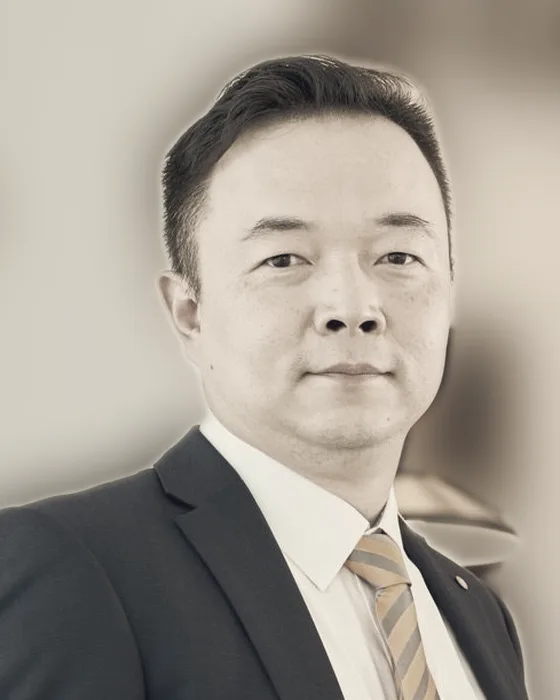
Tim Y. Chen
Founder & Managing Partner, Echo Nova Capital & Partners
This article is also available in German: Unternehmen an einen Käufer aus China oder Taiwan verkaufen: Worauf es wirklich ankommt
