

The recent news that a high-ranking director from the Fraunhofer Institute is joining Huawei has sent shockwaves through the European industrial and geopolitical landscape. The reaction has been a predictable mix of astonishment, frustration, and calls for tighter regulation.
But as an operator who has spent decades navigating the high-stakes transitions between European R&D and Asian manufacturing agility, I see this not as a "betrayal," but as a critical data point.
We are treating this incident as a security breach. We should be treating it as a market failure.
1. The Incident as a Symptom
Personnel rotation is generally healthy. In a globalized economy, the exchange of minds is what drives innovation. However, when the flow of talent becomes a one-way drain in critical sectors like telecommunications, AI, and hardware engineering, we have a systemic problem.
Talent, much like capital, follows the path of least resistance toward maximum impact. If the European environment remains high-resistance—choked by bureaucracy, rigid labor structures, and "boardroom lag"—our most ambitious minds will inevitably look elsewhere.
The "Huawei Shock" is a symptom of a deeper malaise: Europe is losing its gravitational pull.
2. The Personal Pursuit: What Do High-Performers Actually Want?
In my experience turning around companies like LEDVANCE and navigating M&A in the Mittelstand, I’ve learned that elite talent is rarely motivated by salary alone. At the level of a Fraunhofer director, the primary currency is "Speed to Impact."
Elite engineers and researchers want to see their work move from the lab to the factory floor—and eventually into the hands of millions—as quickly as possible.
Compare the two environments:
- The European Institute: Often characterized by a "Boardroom Lag" where every strategic pivot requires multiple rounds of consensus, government alignment, and administrative box-ticking.
- The Asian Strategic Acquirer: Characterized by a "Sprint Culture." Decisions that take months in Munich or Paris happen in days in Shenzhen or Singapore. They offer massive capital injection and a mandate for radical agility.
Have we actually asked our top researchers what is inside their "personal pursuit request"? If we don't understand the internal drivers of our talent, we cannot hope to build institutions that attract them.
3. Hard Power vs. Soft Power: The "Manus" Case Study
We often hear calls to "close the door"—to use FDI regulations and legal barriers to prevent talent from working for foreign competitors. But hard power has its limits, especially in a legal environment like Germany’s that prizes individual freedom.
Consider the recent case of Manus, the Chinese AI agent startup. The team moved its base to Singapore in 2025—a neutral ground that allowed the talent to flourish outside the immediate reach of Chinese regulatory oversight. Meta (Facebook) then acquired the company.
The Chinese government was, predictably, incensed. According to a Wall Street Journal report, the two co-founders were told not to leave China while a government review was under way. The logic was clear: "If I cannot have this talent, neither can you."
In Germany, we cannot—and should not—adopt such "hostage" tactics. Our legal framework makes it nearly impossible to forbid a private citizen from taking a job elsewhere. Because we cannot lock the door, our only option is to make the house so attractive that no one wants to leave.
4. The Structural "Valley of Death"
In the world of DeepTech and hardware, we talk often about the "Valley of Death"—the gap between a proven prototype and a scalable product. But there is also a "Human Valley of Death."
European engineers are often stifled by a rigid labor environment that prioritizes "work-life balance" over "mission-critical intensity." While we debate the merits of a 32 or 35-hour work week, our global competitors are operating on a 9-9-6 schedule (9 AM to 9 PM, 6 days a week).
I am not suggesting we replicate the grueling conditions of some Asian tech hubs. However, we must acknowledge the "factory floor" reality: Engineering physics doesn't care about our labor laws. Innovation requires intensity. When we prevent our most driven individuals from working at the pace they desire, we aren't protecting them—we are frustrating them into the arms of our competitors.
5. A Policy Prescription for Competitive Excellence
To move from a defensive posture to an offensive one, we need to provide our institutes and Mittelstand champions with better tools. We need to "move the government's fingers" away from the innovation process.
I propose three pillars of structural retention:
I. Voluntary Overtime & Incentive Alignment
We must allow individuals who want to work overtime to do so—and ensure they keep the vast majority of the rewards. High-performance talent should not be capped by collective bargaining agreements designed for the median worker. If an engineer wants to put in 60 hours to hit a milestone, the tax and legal system should facilitate that, not penalize it.
II. Deregulation of Research Institutes
We need to give institutes like Fraunhofer the freedom to behave more like startups. This means streamlined procurement, the ability to offer equity-like incentives, and the power to form agile joint ventures without two years of federal oversight.
III. Fiscal Competitive Tools (Tax Holidays)
To attract and retain "Star Talent"—both domestic and foreign—Germany should implement targeted tax holidays. If a world-class AI researcher chooses Munich over Silicon Valley or Shenzhen, we should reward that choice with a significantly lower tax rate for their first five years.
6. Conclusion: Winning the Talent War

The Huawei incident should be our "Sputnik moment." It is a wake-up call that European IP is only as secure as the people who create it.
We cannot win a talent war by building walls. We win by building the most creative, agile, and rewarding ecosystem on the planet. Germany shouldn't just be trying to "keep" its people; it should be the place where the world’s most ambitious operators and engineers feel they must be to change the world.
At Echo Nova Capital & Partners, we specialize in bridging these cross-border gaps. Protecting European industrial legacy requires more than just capital—it requires a fundamental shift in how we value and empower the minds behind the machines.
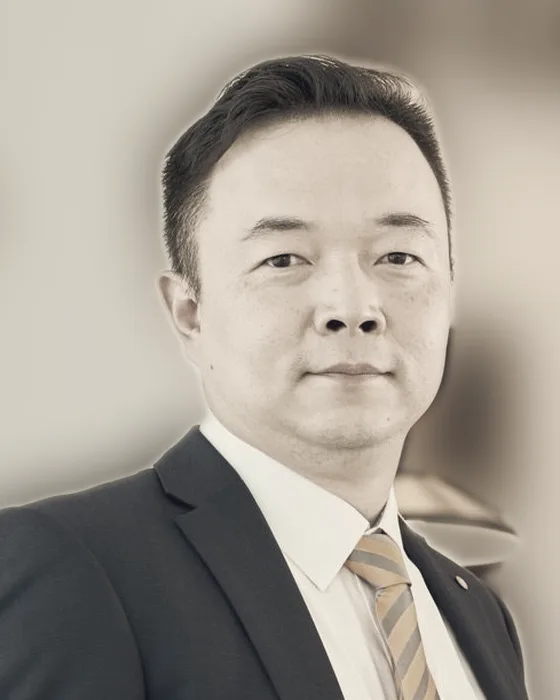
Tim Y. Chen
Managing Partner, Echo Nova Capital & Partners
Munich, Germany
First published on 5 April 2026 on LinkedIn, on the Echo Nova Capital & Partners page. Read the original
This article is also available in German: Jenseits des Huawei-Schocks: Warum Deutschland den Krieg um die besten Köpfe verliert – und wie wir ihn zurückgewinnen
